Tuesday, August 17, 2010

General Pre-Service Procedures

Factors involving meeting preparation deadlines

  • Equipment - Check lists
  • Staff - Training, schedules and teamwork
  • Accompaniments checked - clean and sufficient
  • Order taking - book, pen : billing
  • Reservation book - Checked :to know how many pax is expected

Part of preparing for service in a food and beverage establishment, is preparing, designing and perfecting your menu.There are different types of menus and you have to decide which type you are going to use, ie table d'hote or a la carte, depending on the event or type of restaurant. Once you have decided on a menu, you can start looking at the accompaniments you want to or should serve with your meals and make sure that you have the correct equipment for serving the different dishes and that they are ready and clean.

Classic menu sequence

It is a 17 course meal, most establishment follow the classic sequence, but will differ from the establishment to establishment.The course is as follows:

1. Hors d'oeuvre
2. Potages (soup)
3. Oeufs (eggs)
4. Farineux (pasta and rice dishes)
5. Poisson (Fish)
6. Entree
7. Sorbet
8. Releve
9. Roti (Roast)
10.Legumes (Vegetables)
11.Salade
12.Buffet froid (cold)
13.Entremets (sweet)
14.Fromage (cheese)
15.Savoureux (savouries)
16.Dessert (fruits)
17.Beverages

There are a lot of things that influence a menu, ie, culture and believes, food allergies, medical reasons, budgets, time and season availability. When all of the above is taken into consideration, only then can the menu be finalized.

Accompaniments are also very important, and you must be sure that the accompaniments are well suited to the specific dish and that you have a sufficient amount of it.This is also part of pre-service procedures.

Always be sure to have your specialist equipment ready, clean and in the right place. Know what all equipment are used for and where they should be kept. Side boards, display buffet and trolleys must be in working order and kept clean and tidy.

All of this happens during pre-service, this is from the time staff arrives till actual serving time. Pre-service procedures are vital, to ensure readiness, speedy service, hygienic environment, friendly staff and good variety menus. This all keeps and exceeds establishment standards.

Monday, July 19, 2010

Country House


This past 2 weekends I worked in the Guesthouse, haven't been there in a while, so it was a lot of fun and very refreshing, doing what I love... preparing rooms, welcoming drinks and canapés, receiving guests, checking them in, introducing them to our Country house and laying down the policies and procedures!

Preparing the dining area for the different meals different times of the day. We use the TABLE D'HOTE cover for our meals. serving the guests food and drink, clearing and cleaning work and serving area.

During the weekend guests would want to do some activities and it is one of our procedures to do the booking for the activity of the guests' choice for them at reception and make arrangements that they are picked up at the guesthouse, we want to make his or her stay as comfortable and pleasurable as possible.

Sundays can either be quick and relaxed or busy and never ending.This Sunday was one of the busy ones, we had 12 people for breakfast, everyone ended up eating almost at the same time, some guests had to go to the wildlife centre at 10, during breakfast another couple wanted to check out, so i had to sort out their bill and see them off, meanwhile another guest was sick, and cancelled going to the wildlife centre on the last minute, and then everybody checked out at the same time, talk about crisis control and time management! All in all the guests were happy and satisfied, and we received some wonderful feedback.After a long weekend that always makes it worth while.

Robyn and Natalie did the stock take of the wine cellar while John showed me how to finish the cash-up and balance the money on plus point and unires and how to see and show the amount of money that has to be paid to the kitchen for RESERVATION FOOD, this is food already paid for when the reservation was made.

After I dropped the cash-up, I sorted and cleaned the bar and office, and redid some filing of registration cards, stock sheets, order forms and activity/information pamflets. Working in a neat and tidy environment improves work performance and time management.

Monday, June 21, 2010

Stock Control

Factors of stock

  • Environmental - Staff, time & date
  • Purchases (documentation)
  • Sales (documentation)
  • Stock preparation
  • Stock count
Environmental factors

These are factors in the direct environment of the stock or which has to do with the stock take and which influence the stock take before and after.
  • People to inform (cleaners, sale staff, customers)
  • Time
  • Space
  • Date
This will all be part of your preparation and planning of the official stock count.To improve efficiency of preparation of stock take, always confirm with your stock supplier so that there are no deliveries during the stock take.

What do we want to know about our stock?
  • Purchases (In store room)
  • Sales (already used or sold)
  • On-hand ( still in use)
Types of stock
  1. Equipment (capital)
  2. Furniture (capital)
  3. Operating stock

When dealing with stock, you work with different types of documentation, like, order forms; issue sheets/books; journals; reduction reports; variance reports; movement reports; stock sheets; expense sheets.


Regarding the correct recording of stock items, the documentation that goes with it, is very important, that is how you know, where your stock is, who was responsible for it, why is it missing, how much was sold or damaged. In the end, stock is money, so it is vital for all personal involved (working with any kind of stock) to take care of it and use it appropriately.

Friday, June 4, 2010

First Aid Training

Within the hospitality industry health and safety is very important and it is vital for all staff members to know their safety procedures so that they can assist other staff members and guests.

This past week we had our first aid training course. The first day we did the theoretical part, and the next day the practical.First aid is all about assisting people who are injured or sick, but it is vital to never treat a patient above your qualification skills and knowledge. When you arrive on a scene where there is an injured person there is a certain procedure to follow in helping this person:

1. Hazards - Remove all hazards, which could be dangerous to you or the patient or the by standers.
2. Hello - Talk to the person, introduce yourself, assess the awareness of the patient and get permission to help him.
3. Help - Call for help or ask someone to phone an ambulance.
4. Airway - Check if there is anything blocking the patients airway, if there is, remove it.
5. Breathing - Look, listen and feel for breathing, if there is no breathing, do 2 rescue breaths.
6. Circulation - Check for blood circulation, by means of capillaries refill and feel if the patient has a pulse.
7. Stop severe bleeding - Applying direct pressure, using pressure points and elevating the injured body part.

CPR - Cardio Pulmonary Resuscitation

1. Check airway and remove any objects if it is blocking the airway.
2. Look, listen and feel for breathing.
3. Place mouth-to-mouth piece in patients mouth.
4. Tilt the head back and lift the chin to open the airway as far as possible.
5. Give 2 slow breaths.
6. Feel for a pulse.
7. Give 30 compressions on an even rhythm about 4-5 cm deep.

Repeat this cycle 4 times, and remember to feel for a pulse and check breathing.

Tuesday, May 18, 2010

Fire Prevention

Fire Prevention and Fire Safety

Fires are one of the most dangerous and life threatening things that could happen within various types of establishments. Working on a nature reserve and in the hotel industry, i have definitely become more safety cautious and aware of all safety and fire hazards.


As part of my Hotel, Lodge and Resort Management course, i have to know the following:

  • what types of fire hazards there are
  • how to identify them
  • how to prevent a hazard from causing a fire
  • what procedures to follow in case of a fire


Hazards can be any of the following:


Loose wires/faulty wiring
Open gas bottles/stoves
Shortage
Mixing of the wrong flammable chemicals
Cigarettes which are not disposed of properly

It is a lot easier to prevent a fire from happening than fighting a out of control fire. Always be alert, report faulty equipment, get it fixed, remove any hazard or barrier that might prevent you from following correct procedures.


There are 3 components that are necessary for a fire to start, if one of the 3 is not present or is removed, the fire doesn't happen or it is extinguished, these components are:
  1. fuel - something to burn
  2. air - oxygen to keep the fire going
  3. heat - gas, electricity
How to extinguish a fire:

  1. starving - remove the fuel
  2. smothering - remove the air
  3. cooling - remove the heat

Procedure to follow when a fire occurs:
  • Stay calm, assess the fire, where it is; what type of fire; how big
  • Sound the alarm
  • Inform the Manager on duty, who will then notify the fire brigade
  • Assist guests and other staff members
  • Close all windows and doors and turn of electrical equipment, as you evacuate
  • Evacuate to assembly point

All staff members should be trained and educated on the different types of fire extinguishers and other fire fighting equipment, like a fire blanket and smoke detectors.

When extinguishing a fire, always aim at the source of the fire, the bottom, and kill it.

All establishments must have fire fighting equipment, located throughout the building, well marked with a sign saying what it is and where, so it is easy to find and use during a emergency.


Different types of fire extinguishers:


  • Water(red) - Water is used for fire in ordinary combustible materials such as wood, paper ext.
  • Foam(cream) - Puts out fires by forming a blanket of foam over the top of the fire and smothering it.Can be used for natural materials
  • Carbon dioxide(black) - Used for fires of inflammable liquids and has the advantage that it does not conduct electricity
  • Dry powder(blue) - Commonly used for fat fires. It does not conduct electricity
  • Halon(green) - Known as BCF , bromochlorodifluoromethane. It does not conduct electricity. It is a gas, and creates a thick cloud and may irritate the users throat
Fires are extremely dangerous and hazards should not be overlooked. In the hospitality industry there are a lot of fire hazards, that is why staff should be properly trained, so that they know exactly what to do, how to do it and who to ask for help.

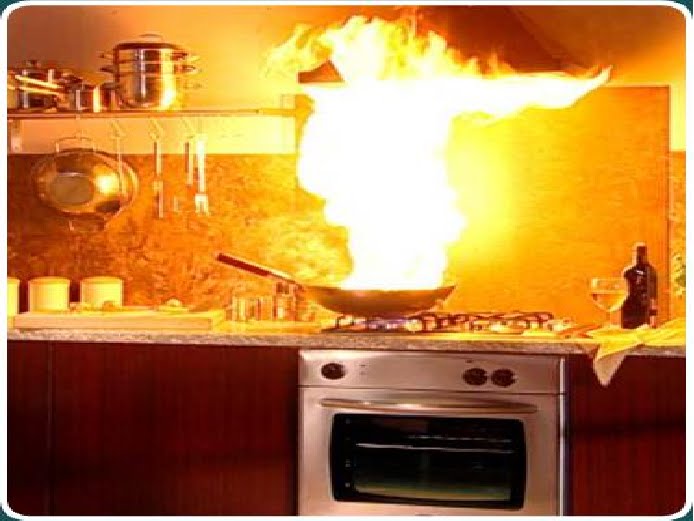
Simple example of oil catching fire in a kitchen

Wednesday, April 28, 2010

Reception operations and services

The lodging industry

Hotels can be classified in different ways : Commercial hotels, airport hotels, suite hotels, extended stay hotels ext. The reason for this, is that different hotels, cater for different types of guests, all with different types of needs. Commercial hotels are located in down town/business districts, and they mostly cater for business travellers. Resort hotels are planned destinations/vacation spots, located in mountains, islands ext. Away from residential areas.

The service we render, is not a physical thing, but rather a action or deed.It is intangible, you can't touch, taste or return a service. Guests can only take away the memories of their experience. That is why it should be powerful, clear and precise. All hotels/establishments have certain standards, and by keeping up these standards, quality becomes reality.

Hotel organization

A hotel is a very complex and unique structure, and takes a lot of people, teamwork and good management to be a success and exceed the expectations of it's guests.A hotel is made up of different departments, each with it's own responsibility. The operating departments are the revenue centres, they sell goods or services to guests, thus generating revenue for the hotel.
Support centres, also known as, cost centres, include housekeeping, accounting, engineering, maintenance and human resources. They generate direct revenue, but provide support for the hotels' revenue centres.

Front office operations

The guest cycle

Pre-arrival : Reservations
Arrival: Registration, uniformed service by desk agents
Occupancy: Occupancy service
Departure: Check-out and uniformed service


Reservations

Reservations is the first step of communication between the guest and a staff member of your establishment, and is absolutely vital, because it's the first impression the guest has of your company standards and that is when the expectation is set.

Their are different types of reservations: Guaranteed, prepayment, credit card, advance deposit, travel agent, voucher, corporate, non-guaranteed.
To make a reservation you need the following information : guests' name, address, telephone number, company name, date of arrival/departure, type and number of rooms requested, method of payment and any special requests.

There are a lot of reports that can be generated from reservation data, like: reservation transactions report, commission agent report, turn away report and revenue forecast report. Other useful documents are, arrival lists, departure lists, in-house lists and reservations history.


Registration

Steps of the registration process:

Pre-registration, creating the registration record, assigning the room and rate, establishing method of payment, issuing room key, fulfilling special requests.

Pre-registration activities help accelerate the process, guests can only verify/double check if information is correct and sign.

Computerized systems makes the whole process a lot faster and more effective. Settling accounts on check-out is fast and the system automatically updates the system and room status report. Communication between front office and housekeeping is also more effective.

Front office responsibilities

Working in the front office department/front desk, you have a lot of responsibilities and tasks that needs to be done, to ensure customer satisfaction and to make sure by following the correct procedures, all allocated tasks are dealt with, such as:

  • Delivery of mail, messages and faxes
  • handling guests' accounts and folios
  • observe all persons entering and exiting hotel
  • dealing with complaints and compliments
  • dealing with guests inquiries
  • ensure guest and staff safety
  • making bookings for activities
  • allocating rooms and issuing room keys

Thursday, April 22, 2010

Glossary - Reception

Working in all the different departments of the hotel industry, you learn and use a lot of different and helpful terminology, to speed up the work process and keep up the standard and professionalism of your company. These are some of the terms we use in the front office department:

Account - A form in which financial data are accumulated and summarized.
Account aging - A method for tracking past due accounts according to the date the charges originated.
Account receivable - An amount owed to the hotel.
Account receivable ledger - A grouping of accounts receivable, including the guest ledger and the city ledger.
Adjoining - Rooms with a common wall but no connecting door.
Adjacent rooms - Rooms close to each other, such as across the hall.
American plan - A billing arrangement under which room charges include the guestroom and three meals.
Auditing - The process of verifying front office accounting records as to accuracy and completeness.
Back of house - The functional areas of a hotel in which personnel have little or no direct guest contact, such as the engineering, accounting and human resources.
Block- An agreed-upon number of rooms set aside for members of a group planning to stay at the hotel.
Cash voucher - A voucher used to support a cash payment at the front desk.
Central reservation system - A network for communicating reservations in which each participating property is resented in a computer system database and is required to provide room availability data to the central reservations center on a timely basis.
City ledger - The collection of all non-guest accounts, including house accounts and unsettled departed guests accounts.
Commercial hotel - A property, usually located in a downtown or business district, that caters primarily to business clients.Also called a transient hotel.
Confirmation letter - A letter sent to the guest to verify that the reservation has been made and that it's specifications are accurate.
Control folio - An accounting document used internally by a front office computer to support all account postings by department during a system update routine.
Direct billing - A credit arrangement, normally established through correspondence between a guest or a company and the hotel, in which the hotel agrees to bill the guest or the company for charges incurred.
Electronic locking system - A locking system that replaces traditional mechanical locks with sophisticated computer based guestroom access devices.
Emergency key - A key that opens all guestroom doors, even when they are double locked.
End of day - An arbitrary stopping point for business day, eststablished so that the audit can be considered complete through that time.
European plan - A billing arrangement under which meals are paid separately from rooms.
Forecasting - The process of predicting future events and trends in business. Typical forecast developed for the rooms division include room availability and occupancy forecast.
Front office accounting formula - Previous balance + debits - credits = net outstanding balance.
Guaranteed reservation - A reservation that assures the guest that a room will be held until check-out time of the day following the day of arrival.The guest guarantees payment of the room, even if the room is not used, unless the reservation is canceled properly.
Housekeeping status report - A report prepared by housekeeping department that indicates the current housekeeping status of each room, based on a physical check.
Key rack - An array of numbered compartments used to store guestroom keys.
Night audit - A daily comparison of guest accounts with revenue center transaction information.
Pre-registration - A process by which sections of a registration card or it's equivalent are completed for guests arriving with reservations.
T-account - A two column account-recording format in which debits are posted to the left side and credits to the right side.
Traveler's check - A prepaid check sold by banks and other financial institutions which is considered equivalent to cash.
Upselling - A sales technique whereby a guest is offered a more expensive room then what he or she reserved, and then persuaded to rent the room based on the room's features, benefits, and his or her needs.